
Industry information
Company News
- Fluorocarbon aluminum veneer: the fashion darling of the aluminum industry, how much do you know?
- Fluorocarbon aluminum veneer: a shining pearl in modern architecture!
- Aluminum veneer customization, creating a new trend of personalized space
- Customized aluminum veneer to create your own fashionable space
- Aluminum veneer: a lightweight revolution in industrial aesthetics
Industry dynamics
- Research on Manufacturing Process and Application of Aluminum Alloy Air Conditioning Protective Cover
- Strength and weather resistance testing of aluminum veneer
- Aluminum veneer customization, creating a new trend of personalized space
- Carved aluminum veneer, the new aesthetic favorite of modern architecture
- Production process and technological progress of aluminum veneer
Frequently asked questions
- How to improve the fire resistance of aluminum veneer?
- How to identify the quality of aluminum veneer?
- How to store and transport aluminum veneer?
- How to design customized aluminum veneer?
- How to determine the quantity and size of customized aluminum veneer?
contact us
Mobile:+86 15627778610
Email: 2201229786
Address: No. 5 Binjiang Road, High tech Zone, Zhaoqing City, Guangdong Province
Aluminum veneer thickness selection guide
- Author: Lesilong Technology (Guangdong) Co., Ltd
- Release time: February 22, 2025 13:37:24
- Click:0
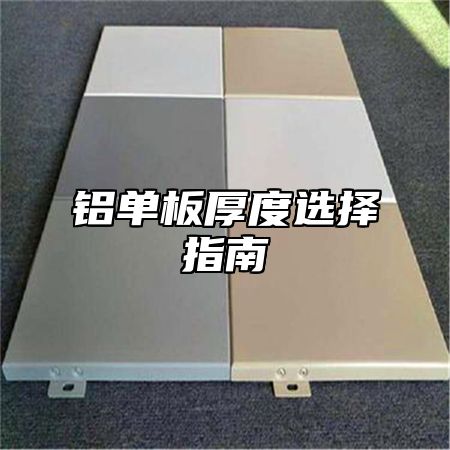
Aluminum veneerIt is a widely used building material, and its thickness is one of the important factors affecting its performance and service life. When choosing aluminum veneer, it is necessary to determine its appropriate thickness based on specific needs and usage environment. Next, let's take a detailed look at the selection guide for aluminum veneer thickness.
1、 Usage classification
Aluminum veneer has a wide range of applications, including building curtain walls, roofs, interior decoration, and many other fields. The thickness selection of aluminum veneer varies in different fields, which are introduced below:
1. Building curtain wall: Building curtain walls usually need to withstand large wind pressure and self weight loads, so their thickness is generally greater than 2mm, with common thicknesses of 3mm, 4mm, 5mm, etc.
2. Roof: The thickness of the aluminum veneer on the roof is generally small, between 2-3mm, mainly considering its lightweight and thermal insulation performance.
3. Interior decoration: The thickness of aluminum veneer for interior decoration is generally between 0.8-2mm, mainly considering its decorative and economic properties.
2、 Material classification
There are many types of materials for aluminum veneer, and the thickness selection of different materials also varies. Common aluminum veneer materials include 1 series, 3 series, 5 series, etc. Below are separate introductions:
1. 1-series aluminum veneer: The main component of 1-series aluminum veneer is AlMg, which has high strength and corrosion resistance, but its hardness is low, suitable for some mild building decoration and industrial products. Common thicknesses are 1.5mm, 2mm, etc.
2. 3 series aluminum veneer: The main component of 3 series aluminum veneer is AlMn, which has high strength and hardness and is suitable for some moderate building decoration and industrial products. Common thicknesses are 3mm, 4mm, etc.
3. 5 series aluminum veneer: The main component of 5 series aluminum veneer is AlMgSi, which has high strength and hardness and is suitable for some high-strength building decoration and industrial products. Common thicknesses are 4mm, 5mm, etc.
3、 Structural classification
The structural form of aluminum veneer also affects its thickness selection. Common structural forms include single sheet aluminum veneer, double sheet aluminum veneer, honeycomb aluminum veneer, etc. Below are separate introductions:
1. Single aluminum veneer: The structure of single aluminum veneer is simple, usually processed from ordinary aluminum alloy sheet, and its thickness is generally between 2-4mm.
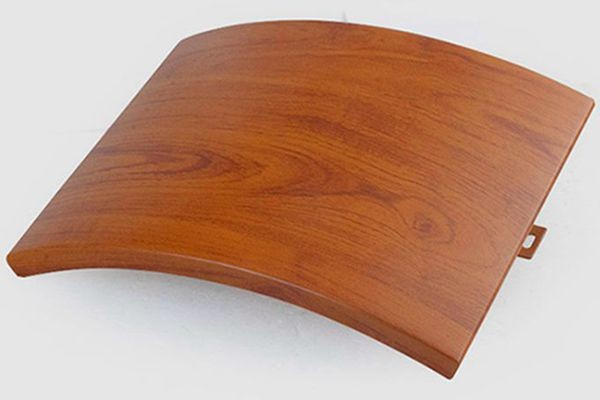
2. Hyperbolic aluminum veneer: The structure of hyperbolic aluminum veneer is complex and requires special processing technology to be made. Its thickness is generally between 3-6mm.
3. Honeycomb aluminum veneer: The structure of honeycomb aluminum veneer is similar to a honeycomb shape, consisting of multiple small holes, and its thickness is generally between 4-6mm.
4、 Conclusion
When selecting aluminum veneer, it is necessary to comprehensively consider factors such as its purpose, material, and structure to determine its appropriate thickness. Generally speaking, building curtain walls require the selection of thicker aluminum veneers; Indoor decoration can choose thinner aluminum veneer; For some special purpose aluminum veneers, such as applications in high or low temperature environments, it is necessary to choose materials and structural forms with special properties. It is also necessary to comprehensively consider and weigh factors such as specific usage environment and budget to ensure that the selected aluminum veneer meets the requirements and can achieve the expected results.
- previous page:Aluminum veneer thickness selection criteria
- Next page:What is the reasonable price range for aluminum veneer?
 Customer service QQ